
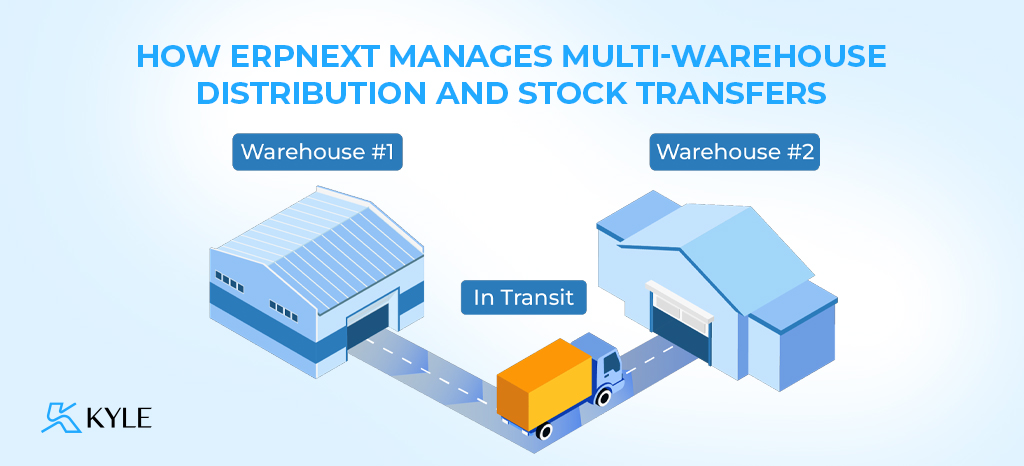
Managing inventory across multiple locations is one of the most complex challenges faced by modern sales and distribution businesses. As organizations expand into new regions, open additional storage facilities, or serve multiple customer segments, their warehouse network naturally grows. While this expansion supports business growth, it also introduces operational headaches, stock mismatches, delayed transfers, inaccurate availability data, and rising logistics costs.
So how do growing businesses maintain control without drowning in spreadsheets or disconnected systems?
This is where ERPNext steps in as a powerful enabler. Designed as a unified business management platform, ERPNext helps organizations streamline inventory management, coordinate warehouse operations, and manage stock movement with clarity and precision.
Before we dive deeper, pause for a moment and think:
Do you always know which warehouse holds what stock—in real time?
If the answer isn’t a confident “yes,” this blog is for you.
ERPNext offers a comprehensive solution for managing multi-warehouse distribution and stock transfers, enabling businesses to optimize their inventory management and logistics while improving visibility and control.
Let’s explore how.
Understanding Multi-Warehouse Distribution
Multi-warehouse distribution refers to the practice of storing inventory across multiple warehouse locations to serve customers faster, reduce transportation costs, and ensure business continuity. These warehouses may include central hubs, regional distribution centers, retail storage points, or third-party logistics facilities.
On paper, multi-warehouse operations sound efficient. In reality, managing them without the right warehouse management system can quickly become chaotic.
Common challenges include:
- Lack of real-time inventory tracking across locations
- Difficulty coordinating stock transfers
- Overstocking in one warehouse and shortages in another
- Inconsistent data between sales, inventory, and logistics teams
Effective inventory management plays a critical role here. Businesses must maintain accurate stock levels, synchronize data across warehouses, and ensure that inventory flows smoothly through the supply chain.
Without proper systems in place, even minor inefficiencies can lead to delayed deliveries, dissatisfied customers, and lost revenue. This is why businesses increasingly rely on intelligent inventory management systems like ERPNext to manage complex warehouse networks with confidence.
ERPNext’s Multi-Warehouse Management Features
ERPNext is built with flexibility at its core, making it well-suited for businesses operating across multiple warehouses. Instead of treating warehouses as isolated units, ERPNext connects them into a single, centralized warehouse management framework.
1. Warehouse Structuring and Hierarchy
ERPNext allows businesses to create multiple warehouses and sub-warehouses based on geography, function, or ownership. For example, a company can define:
- Central warehouse
- Regional warehouses
- Transit warehouses
- Customer or consignment warehouses
This structured approach supports multi-warehouse inventory management while maintaining clarity and control.
2. Real-Time Inventory Tracking
Every stock movement—whether it’s a purchase receipt, delivery, or internal transfer—is recorded instantly. This ensures accurate inventory tracking across all warehouse locations, helping teams avoid guesswork and last-minute surprises.
3. Stock Transfers and Movements
ERPNext supports seamless stock movement between warehouses using well-defined workflows. Whether inventory is moving for replenishment, redistribution, or demand fulfillment, the system ensures proper documentation and traceability.
4. Automated Workflows and Notifications
Automated triggers help notify relevant teams when stock levels fall below thresholds or when transfers are initiated and completed. These workflows significantly improve coordination and warehouse optimization.
Together, these features create a unified system that simplifies operations, improves accuracy, and strengthens overall supply chain management.
Managing Stock Transfers with ERPNext
Stock transfers are the backbone of multi-warehouse operations. Without a reliable process, businesses risk inventory discrepancies and operational delays.
ERPNext simplifies stock transfers by offering structured and transparent workflows.
Creating Stock Transfer Orders
Users can initiate stock transfer entries by selecting source and destination warehouses, defining item quantities, and assigning responsibility. This ensures accountability and reduces manual errors.
Managing Transfer Workflows
ERPNext supports both direct and staged transfers. Businesses can track:
- Items in transit
- Pending receipts
- Completed transfers
This structured approach ensures that inventory records remain accurate throughout the movement process.
Tracking Transfer Status
Every transfer has a clear audit trail. Managers can monitor status updates in real time, enabling better coordination between warehouse teams and logistics partners.
By centralizing stock movement data, ERPNext enhances inventory management and ensures smooth warehouse operations even during peak demand periods.
Benefits of Using ERPNext for Multi-Warehouse Distribution
Implementing ERPNext for multi-warehouse distribution delivers tangible business benefits beyond basic inventory control.
Improved Inventory Accuracy
Real-time updates eliminate stock mismatches and ensure accurate availability across locations—critical for effective inventory tracking.
Enhanced Logistics and Supply Chain Visibility
With centralized data, logistics teams gain complete visibility into stock movement, enabling smarter routing and faster fulfillment across the supply chain management process.
Increased Efficiency and Productivity
Automated workflows reduce manual intervention, freeing teams to focus on strategic tasks rather than administrative corrections.
Better Decision-Making
ERPNext’s built-in reports and dashboards provide actionable insights into stock performance, warehouse utilization, and transfer efficiency—supporting informed decisions and warehouse optimization.
Businesses across wholesale, retail, FMCG, and distribution sectors have successfully used ERPNext to scale operations while maintaining control over growing warehouse networks.
Best Practices for Implementing ERPNext for Multi-Warehouse Distribution
To maximize results, businesses should follow proven best practices when implementing ERPNext.
Configure Warehouse Settings Thoughtfully
Define warehouses clearly and align them with real-world operations. Proper configuration ensures accurate warehouse management from day one.
Set Up Automated Workflows
Automations for reorder levels, transfer approvals, and notifications improve response times and reduce operational delays.
Integrate with Logistics Systems
Integrating ERPNext with transportation or third-party logistics tools enhances coordination and strengthens the inventory management system.
Train Teams Effectively
Well-trained users ensure accurate data entry and consistent system usage, which is vital for long-term success.
A structured implementation approach helps businesses unlock ERPNext’s full potential across multi-warehouse environments.
FAQs
1. Can ERPNext manage multiple warehouses across different locations?
Yes, ERPNext supports unlimited warehouses with real-time inventory visibility.
2. Does ERPNext support internal stock transfers?
Absolutely. ERPNext provides structured workflows for managing stock transfers efficiently.
3. How does ERPNext help with inventory accuracy?
By updating inventory in real time and maintaining complete audit trails.
4. Is ERPNext suitable for growing distribution businesses?
Yes, ERPNext scales easily as warehouse networks expand.
5. Can ERPNext integrate with existing logistics systems?
ERPNext supports integrations and APIs to connect with external logistics tools.
Conclusion
Managing inventory across multiple warehouses doesn’t have to be complicated. With ERPNext, businesses gain a centralized, transparent, and scalable platform that simplifies inventory management, streamlines stock transfers, and strengthens overall logistics operations.
By unifying warehouse data, automating workflows, and improving visibility, ERPNext empowers businesses to operate efficiently while preparing for future growth.
For organizations looking to optimize multi-warehouse distribution, Kyle Solutions, one of the best business solution providers in Calicut and across Kerala, delivers expert ERPNext implementation and support, helping businesses transform complexity into clarity.